What a property looks like at year five when you invest in a landscape master plan from day one — contrasting early, integrated site planning with piecemeal decisions made over time, focused on stewardship, longevity, and ROI.
What Year Five Looks Like When You Plan Right From Day One
A Result Worth Talking About
Not long ago, we had the privilege of working on a project that had every reason to be complicated. The property was historically significant, which meant every decision — every material choice, every outdoor space we designed — had to feel as though it had always been there. As though the original architect had intended it from the very first drawing. That kind of constraint has a way of clarifying things: there is no room for guesswork, no tolerance for "good enough," and no place for anyone to try to be something they are not.
The architect on this project understood that last point better than most. His scope was the interior — a thoughtful renovation of the home itself, right up to the threshold where architecture meets the land. But he recognized immediately that what happened on the other side of that threshold mattered just as much. The indoor-to-outdoor transition had to be seamless: in material, in scale, in character, and in feel. A jarring disconnect at the door would have undermined everything both disciplines were working to achieve. Rather than pretending he could manage the exterior as well, he brought us in early — because he understood that landscape architecture is its own discipline, with its own training, its own registered practice, and its own body of knowledge. The "jack of all trades, master of none" approach would have cost this property dearly. So he did what the best professionals do: he brought the right people to the table, defined each discipline's lane clearly, and made sure both teams were working toward the same vision.
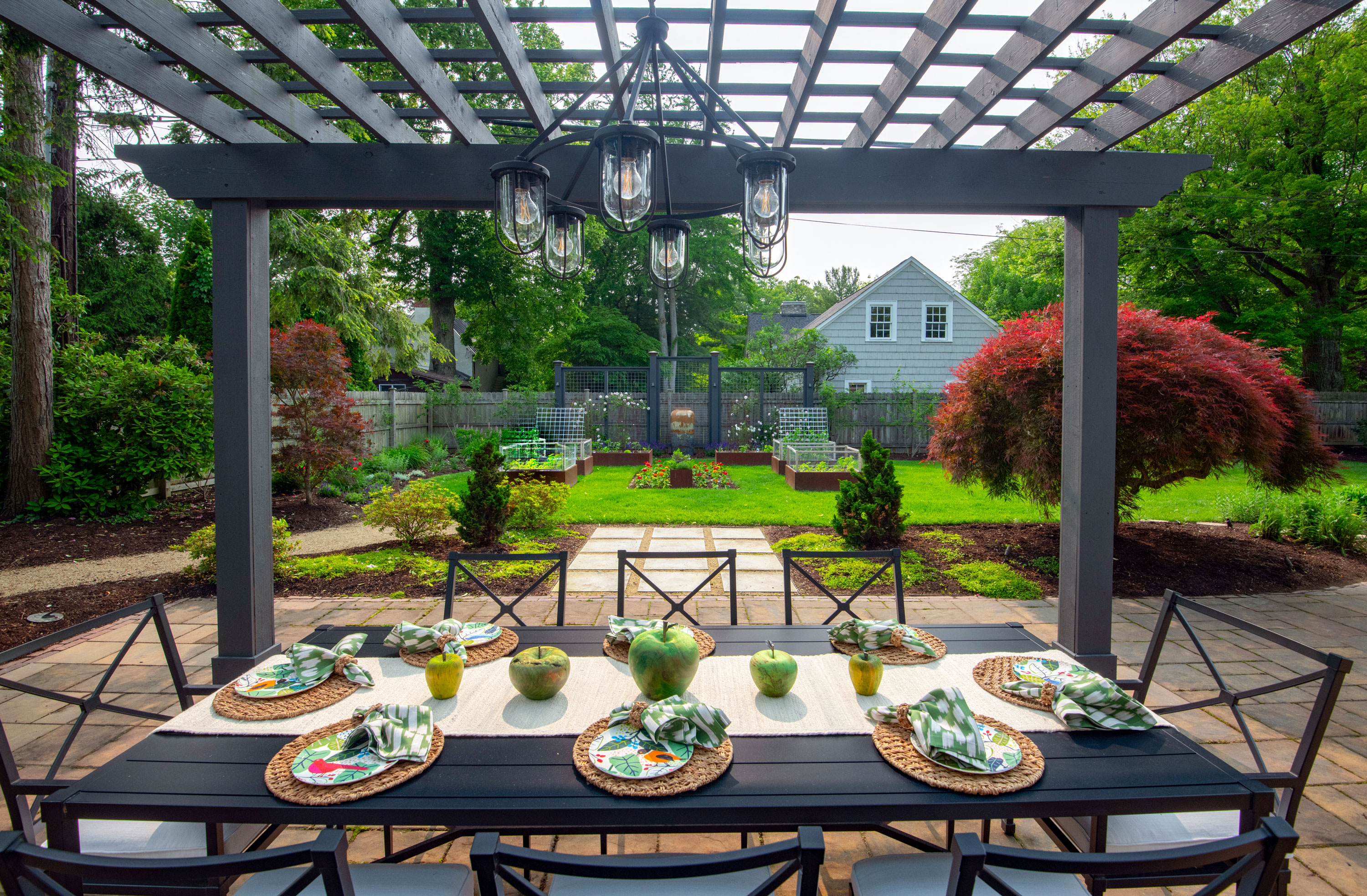
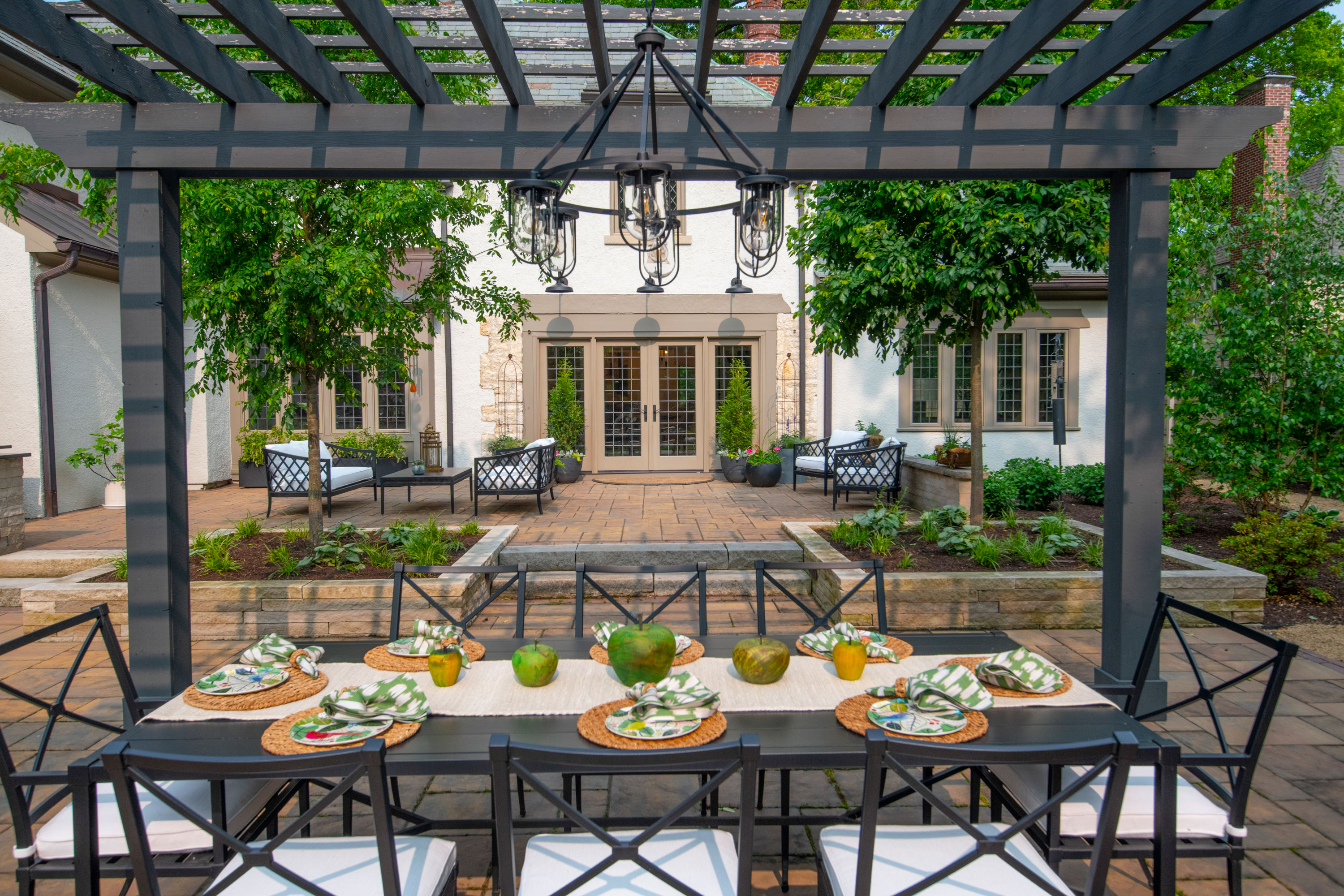
The result was a coordinated team — architect managing the interior, landscape architect managing the exterior — working in close collaboration to ensure that the moment you stepped through the door, you could not tell where one discipline's work ended and the other's began. The homeowner moved forward with the master plan in one phase, nearly all of it. A few years later, after investing in their kitchen and the grounds, they sold the property with a return well above 60 percent — in just four years. To put that in perspective, residential home values have historically increased by approximately 110 percent over a ten-year period. This homeowner didn't wait ten years. A well-conceived plan, executed as a cohesive whole, compressed and accelerated that return significantly.
When the new buyers were asked why they purchased it, the answer was clear: the grounds. It felt, they said, like their own private garden estate.
That is not a decorating outcome. That is a planning outcome.
Does Landscaping Increase Home Value?
One project does not make a statistic, but it does illustrate one. Research consistently shows that professionally designed landscaping adds 5 to 15 percent to residential property value — with exceptional, design-driven results reaching up to 20 percent. Most professional landscape projects return 100 to 150 percent of the investment at resale. Virginia Tech research found that upgrading a landscape from "average" to "excellent" raises a home's perceived value by 10 to 12 percent.
The other side of that data is equally worth noting. Poor or neglected landscaping — the kind that results from deferred planning and piecemeal decisions — can reduce property value by up to 30 percent. That is not a neutral outcome. It is an active financial loss. Planning the landscape well from the start is how you access the top of those ranges, not the bottom.
What a Planned Landscape Becomes Over Time
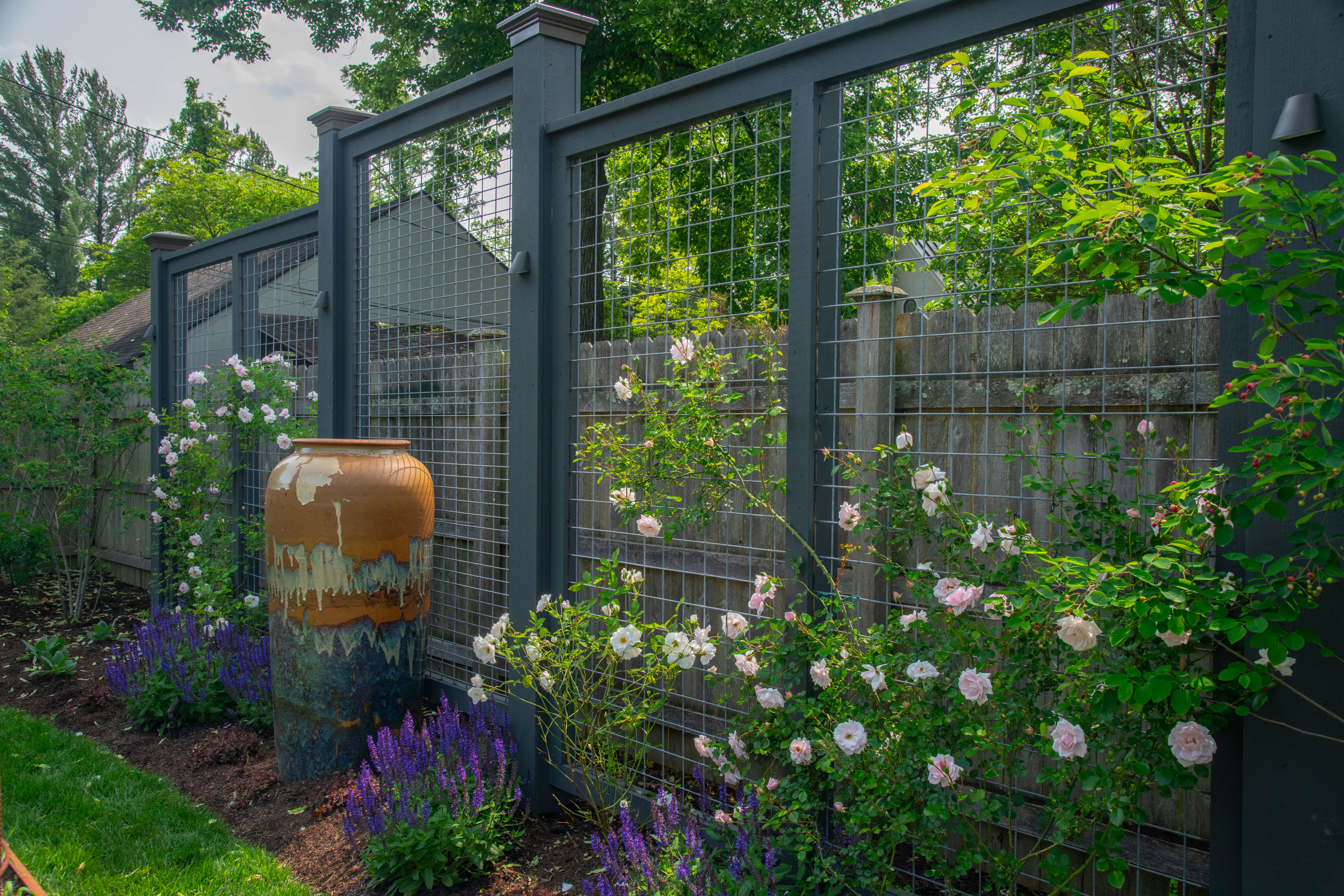
There is a principle in horticulture that captures how plants establish themselves: they sleep, they creep, then they leap. Year one is largely underground — roots settling in, systems establishing — while the design patiently waits to reveal itself. By year three, the intended character of the landscape begins to emerge: shrubs filling out, canopy thickening, the property reading as composed and intentional. By year five, a well-planned landscape is near full stride — requiring roughly 60 percent less maintenance than in its early years, delivering real shade, real privacy, and outdoor spaces that feel genuinely lived in.
A professionally master-planned landscape is designed for that arc from the beginning. Species selection, spacing, drainage, grading, and circulation are all calibrated not just for how the property looks at installation, but for how it performs and feels a decade from now.
What Piecemeal Costs You — In Real Terms
Assembling a property in pieces, one uncoordinated project at a time, tends to follow a different arc — and a considerably more expensive one. Drainage retrofits commonly run $10,000 to $25,000 or more once the problem becomes impossible to ignore, and they are always more disruptive after the fact than when addressed upfront. Hardscape built without coordinated grading can cost roughly double to repair versus building it correctly the first time. Documented cases of unresolved drainage alone show cumulative costs exceeding $30,000 over a decade — spent reactively, stressfully, and without the satisfaction of a finished result.
The pattern is consistent: pay once for a plan, or pay repeatedly for the absence of one.
The One Thing Left Undone
Here is where we return to our client's story — and the one item that did not make it into the implementation phase: drainage.
It was a budget decision, and an understandable one. Of all the elements in the master plan, drainage felt like the most invisible line item. You cannot photograph it for the listing. Guests do not admire it at dinner parties. So when costs needed trimming, it seemed like the safest place to cut. The grounds still looked beautiful. The outdoor spaces still functioned beautifully. The drainage problem, meanwhile, did not disappear. It waited.
The new owners — the ones who fell in love with the grounds and bought the property largely because of them — are now the ones solving it. It is worth sitting with that for a moment. The most invisible item on the plan became someone else's first project. Drainage is easy to defer precisely because it does not announce itself the way a patio or a planting bed does. Until, eventually, it does.
The master plan is most powerful when it is complete. Deferring the elements that seem invisible does not eliminate them. It simply reassigns them.
What This Means for Your Project
January is an excellent time to think about this — not only because spring is closer than it feels, but because the decisions that determine how a property performs at year five are made before a single shovel breaks ground. Before building placement is finalized. Before grades and elevations that shape everything else become permanent.
At Schieber & Associates, our entry point is the Landscape Consultation and Concept — a structured conversation designed to organize your property from day one, with a plan the entire project team can work from, not around. Whether you are approaching a new build, a renovation, or a historically significant property that deserves nothing less than a complete and coordinated vision, that is the conversation worth starting now.
The goal is a property that gets better every year. One that five years from now, you (or whoever comes next) will look back on and know the decisions made at the very beginning were worth it.
Sources:
- American Society of Landscape Architects (ASLA)
- National Association of Realtors (NAR), Remodeling Impact Report: Outdoor Features
- Virginia Tech Cooperative Extension, "The Effect of Landscape Plants on Perceived Home Value"
- TLC Incorporated, "The 10-Year Cost Breakdown: How Much Does Poor Yard Drainage Really Cost?"
- Hadaa, "Landscaping ROI: Does It Increase Home Value?"
- BuildCal, "Does Landscaping Increase Home Value?"
- McHale Landscape Design, "The Benefits of a Long-Term Landscape Strategy"
- Homeplexi, "How to Create Successful Landscaping Projects Over Time"
- Bohler Engineering, "Starting Smart: Why Your First Design Decision Matters Most"
- Angelsun Landscape Services, "How Much Value Does Professional Landscaping Add to a Property?"